Polyglot VR is a choice-based virtual reality game designed to reimagine second-language learning. The project addresses the lack of engaging, practical speaking experience in standard curricula by allowing users to roleplay and converse with AI-driven NPCs. The outcome is an interactive space that develops speaking and listening skills through contextual immersion.
Polyglot VR is een op keuzes gebaseerd virtual reality-spel dat is ontworpen om het leren van een tweede taal opnieuw uit te vinden. Het project pakt het gebrek aan boeiende, praktische spreekervaring in standaard curricula aan door gebruikers te laten rollenspelen en praten met AI-gestuurde NPC's. Het resultaat is een interactieve ruimte die spreek- en luistervaardigheid ontwikkelt door contextuele immersie.
RoleRol
Interaction DesignerInteractieontwerper
TimelineTijdslijn
15 weeks15 weken
TeamTeam
Solo Project (Thesis)Solo-project (Scriptie)
YearJaar
2022
02
The Problem & The UserHet Probleem & De Gebruiker
The ProblemHet Probleem
Traditional language learning relies heavily on book learning, which often fails to engage or provide practical speaking experience. As we get older, finding the time to commit to learning a language is difficult, and the fear of embarrassment can hinder practice.
Traditioneel taalonderwijs leunt zwaar op boekenwijsheid, wat er vaak niet in slaagt om te boeien of praktische spreekervaring te bieden. Naarmate we ouder worden, is het moeilijk om tijd te vinden voor het leren van een taal, en de angst om fouten te maken kan de oefening belemmeren.
The UserDe Gebruiker
The target users are intermediate language learners (A2-B2 CEFR) who own VR headsets and enjoy gaming, typically aged 16-34. They already possess foundational knowledge but struggle with natural cadence, conversational skills, and contextual vocabulary.
De doelgebruikers zijn gevorderde taalleerders (A2-B2 ERK) die een VR-headset bezitten en van gaming houden, doorgaans in de leeftijd van 16-34 jaar. Ze beschikken al over basiskennis maar worstelen met een natuurlijke cadans, gespreksvaardigheden en contextuele woordenschat.
64%
Of language learners experience high "speaking anxiety"
van de taalleerders ervaart hoge "spreekangst"
70%
Of adults regret losing their foreign language skills
van de volwassenen heeft spijt van het verlies van hun vreemde taalvaardigheid
<10%
Language students achieve true proficiency
van de taalstudenten bereikt een werkelijke beheersing
03
The Approach & ProcessDe Aanpak & Het Proces
Research & DiscoveryOnderzoek & Ontdekking
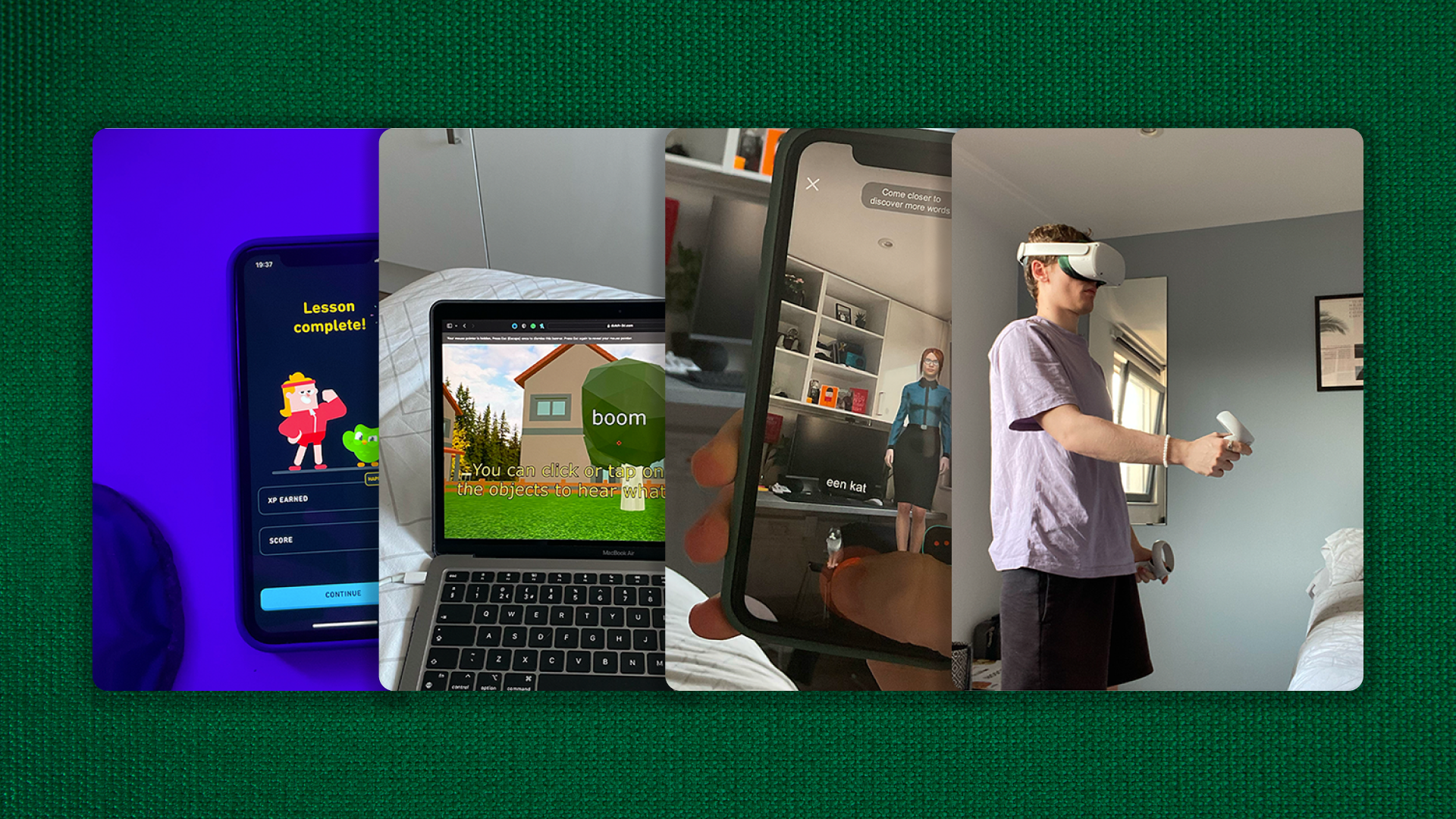
Research began with a literature review on language pedagogy and a market analysis of existing tools like Duolingo and Mondly VR. I conducted 5 user interviews to understand learner motivations, discovering a strong desire for contextual immersion and a fear of embarrassment when speaking.
Het onderzoek begon met een literatuurstudie naar taalpedagogiek en een marktanalyse van bestaande tools zoals Duolingo en Mondly VR. Ik voerde 5 interviews met gebruikers uit om hun motivaties te begrijpen, waarbij ik een sterk verlangen ontdekte naar contextuele immersie en een angst om fouten te maken tijdens het spreken.
Competitive analysis — testing Duolingo, Mondly VR, and AR language apps to identify gaps in immersive learning
Concurrentieanalyse — testen van Duolingo, Mondly VR en AR-taalapps om gaten in meeslepend leren te identificeren
Ideation & WireframingIdeatie & Wireframing
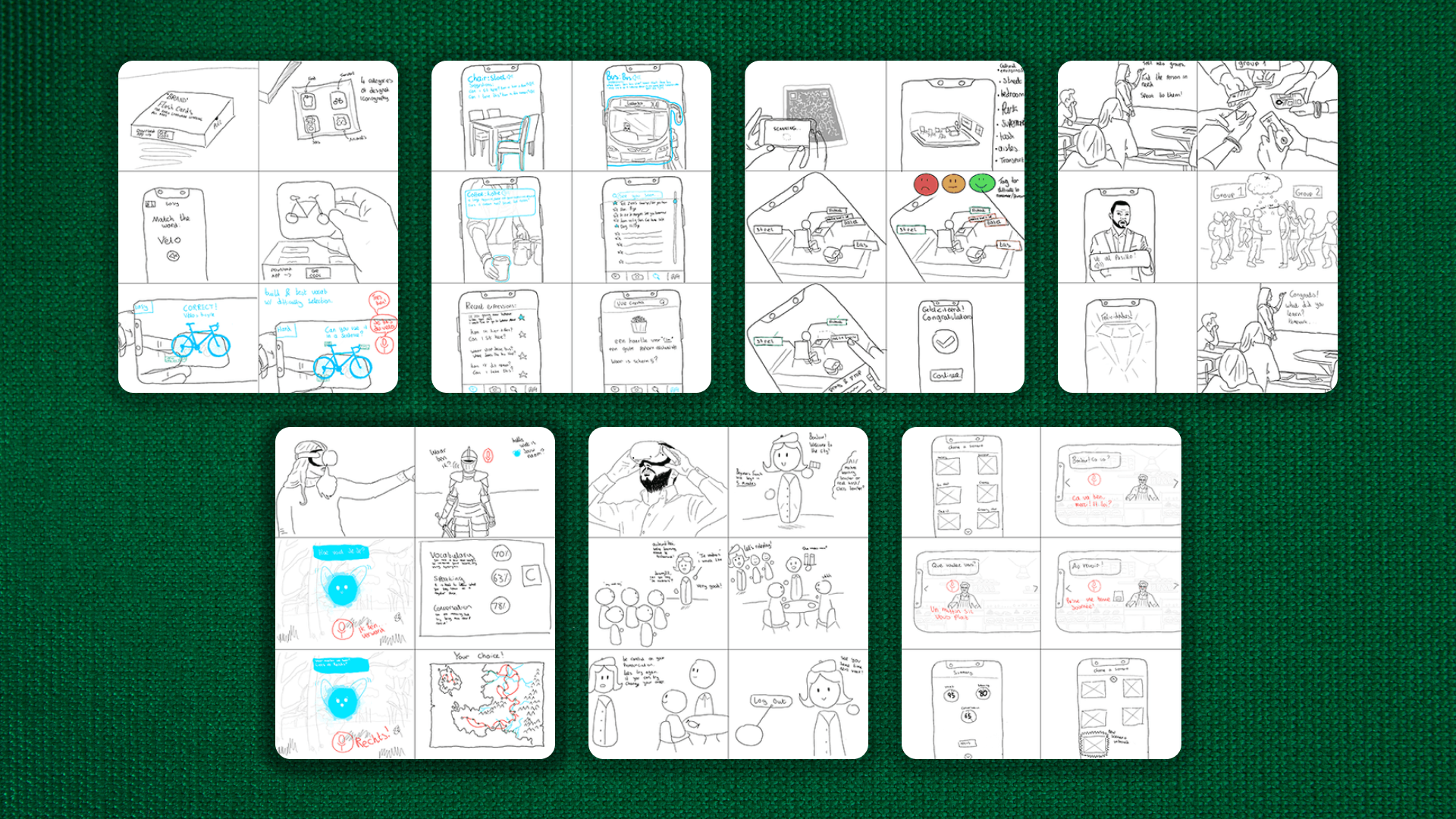
Through techniques like SCAMPER, Crazy 8s, and decision matrices, I produced various AR and VR concepts before pivoting entirely to VR to maximise immersion. I designed the information architecture and wireframes specifically optimised for Oculus' curved UI guidelines, ensuring higher accessibility.
Via technieken zoals SCAMPER, Crazy 8s en beslissingsmatrices produceerde ik verschillende AR- en VR-concepten voordat ik volledig overstapte op VR om de immersie te maximaliseren. Ik ontwierp de informatiearchitectuur en wireframes specifiek geoptimaliseerd voor de gebogen UI-richtlijnen van Oculus, wat zorgt voor een hogere toegankelijkheid.
Seven concept storyboards — from AR flashcards to the final fantasy VR game direction
Zeven concept-storyboards — van AR-flashcards tot de uiteindelijke koers naar een fantasy VR-game
Prototyping & TestingPrototyping & Testen
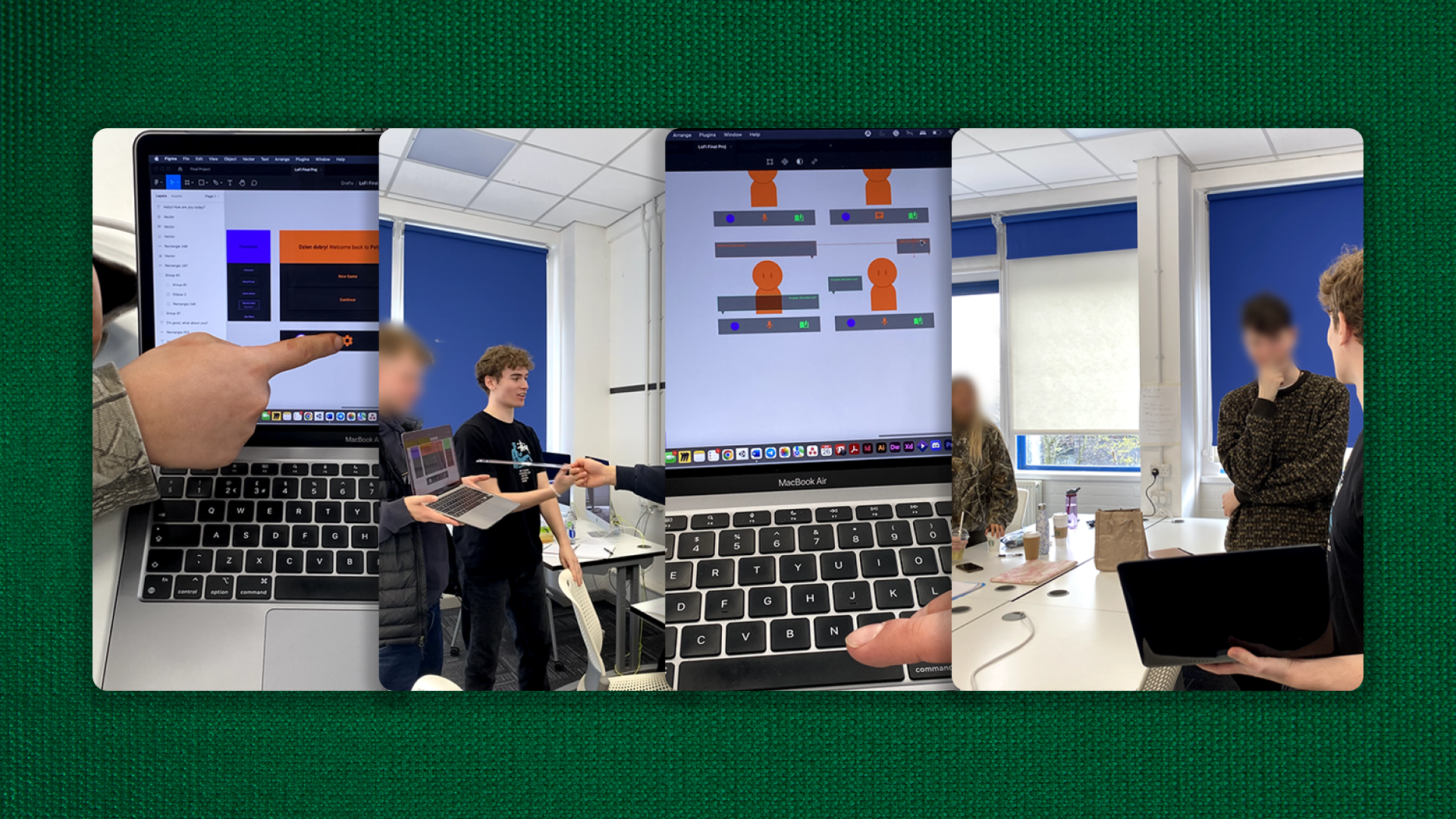
I developed a high-fidelity Figma prototype to test the UI flow, followed by a functional Unity prototype. I hosted a design workshop with multidisciplinary students, utilising Think-Aloud protocols, A/B testing, and Wizard of Oz roleplay to validate the interactions and refine the conversational UI.
Ik ontwikkelde een high-fidelity Figma-prototype om de UI-flow te testen, gevolgd door een functioneel Unity-prototype. Ik organiseerde een ontwerpworkshop met multidisciplinaire studenten, waarbij ik gebruikmaakte van Think-Aloud protocollen, A/B-testen en Wizard of Oz-rollenspellen om de interacties te valideren en de conversationele UI te verfijnen.
Workshopping wireframes through task assignment tests, testing gameplay mechanics through “wizard of oz” and iterating based on peer feedback.
Wireframes uitwerken via taaktoewijzingstests, gameplay-mechanica testen via “wizard of oz” en itereren op basis van peer-feedback.
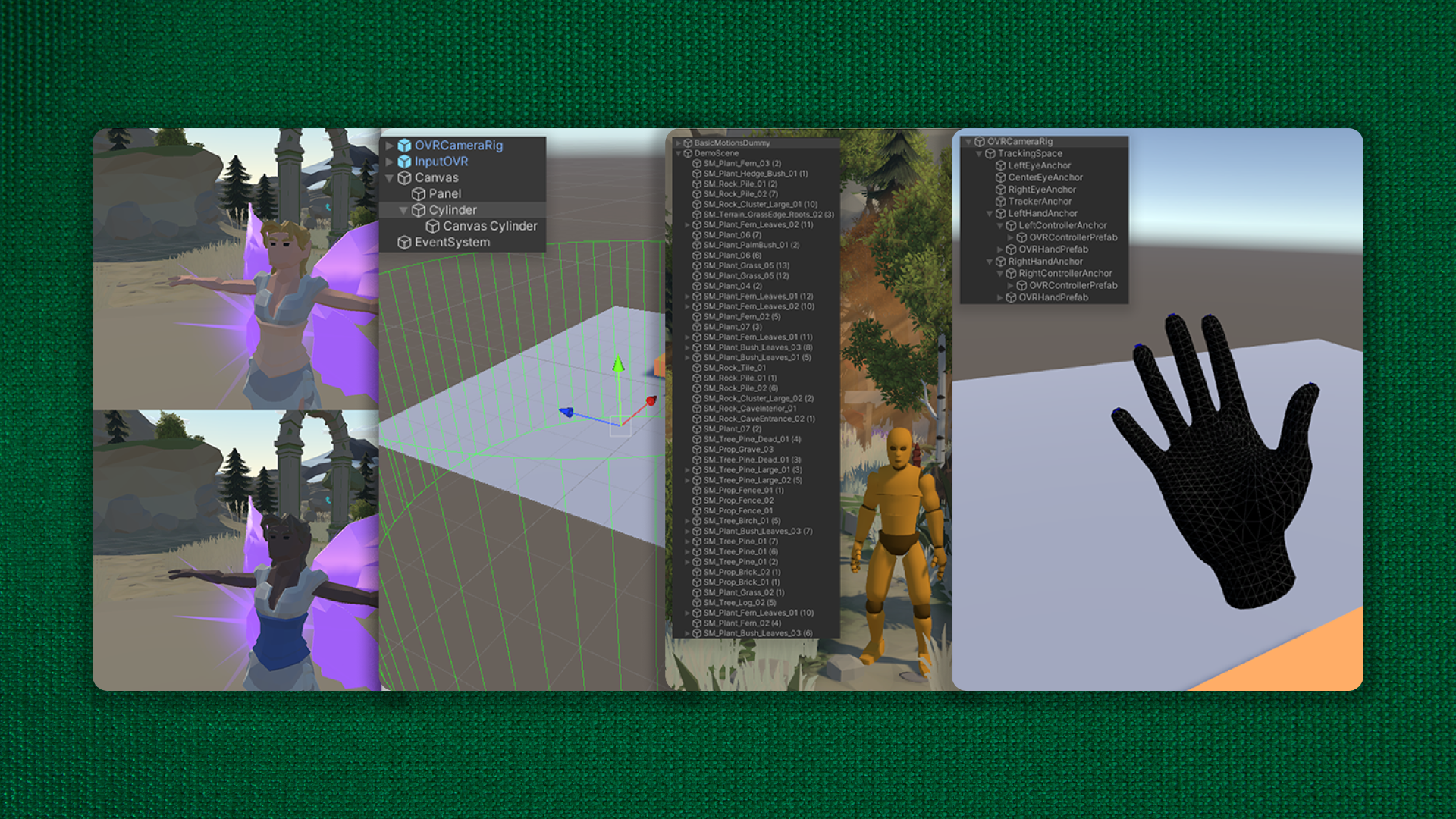
Unity development — NPC rigging, environment design, and Meta Quest hand-tracking integration
Unity-ontwikkeling — NPC-rigging, omgevingsontwerp en integratie van Meta Quest hand-tracking
04
The SolutionDe Oplossing
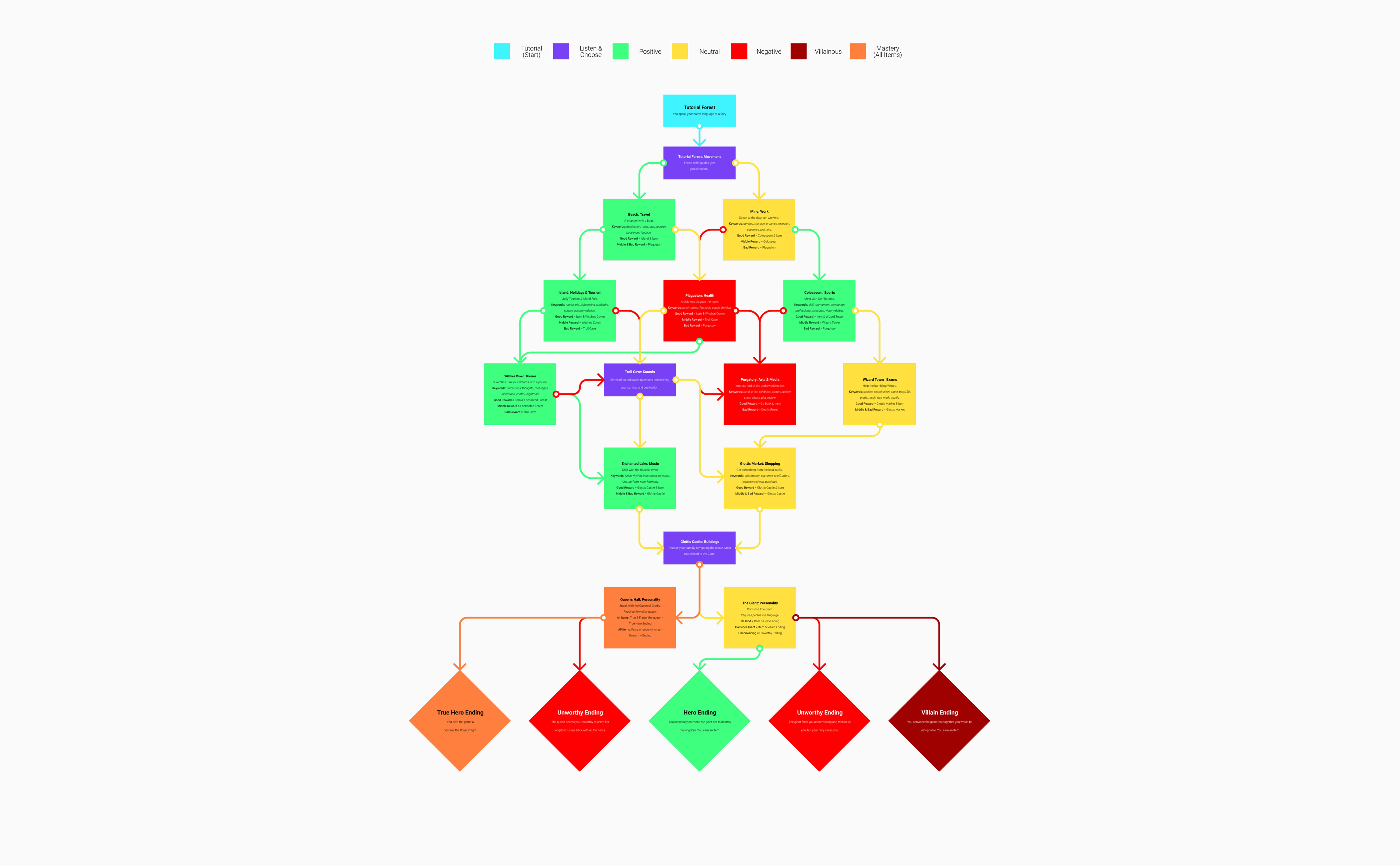
The result was a fantasy-themed virtual reality game where players navigate a branching quest by speaking in their target language.
Het resultaat was een virtual reality-spel met fantasy-thema waarin spelers door een vertakkende zoektocht navigeren door in hun doeltaal te spreken.
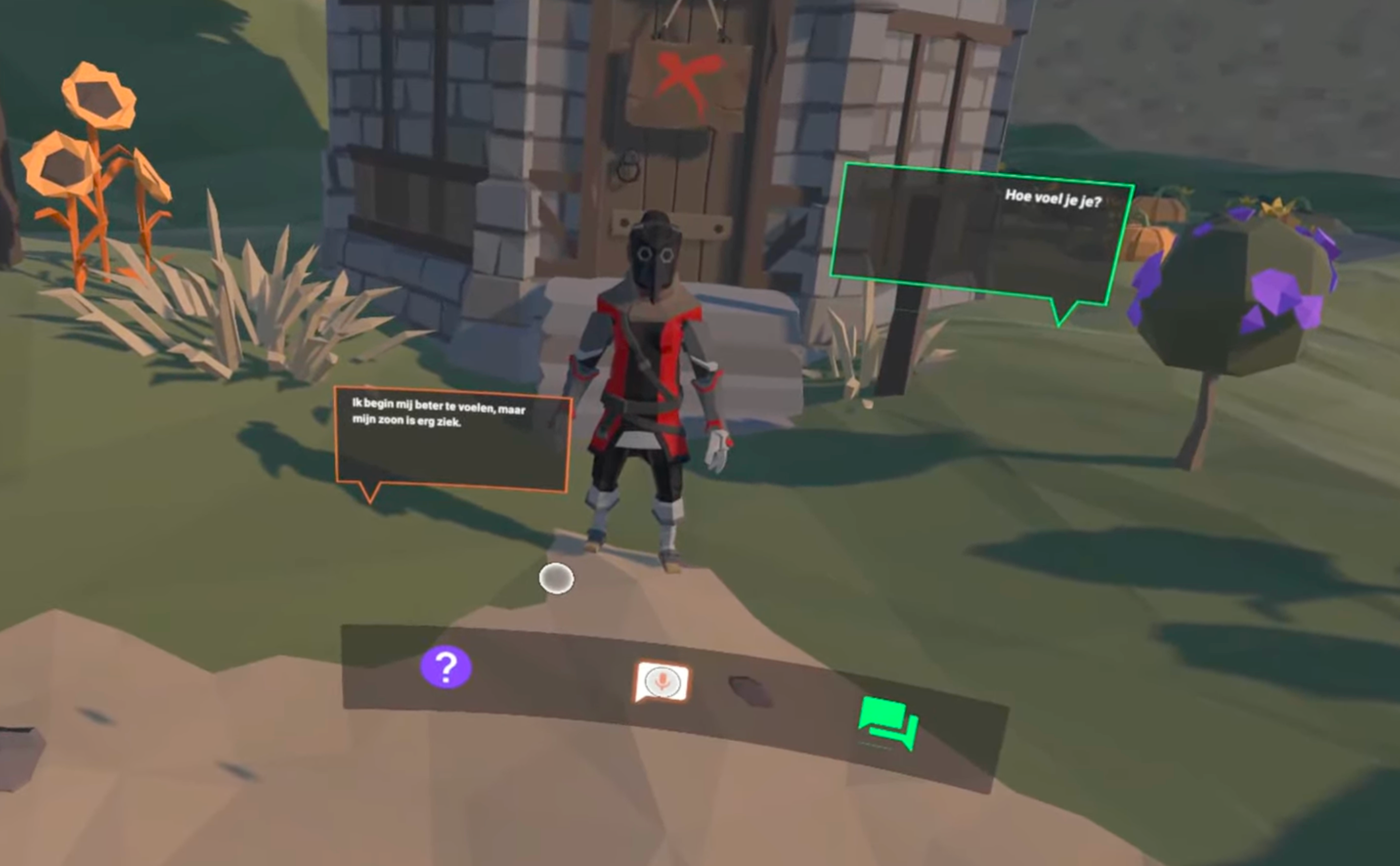
Players speak directly with NPCs using speech recognition. This core mechanic addresses the user's need for practical speaking experience, providing a safe, consequence-free environment to build confidence and experiment with contextual vocabulary.
Spelers praten direct met NPC's via spraakherkenning. Dit kernmechanisme voorziet in de behoefte van de gebruiker aan praktische spreekervaring, en biedt een veilige, consequentievrije omgeving om zelfvertrouwen op te bouwen en te experimenteren met contextuele woordenschat.
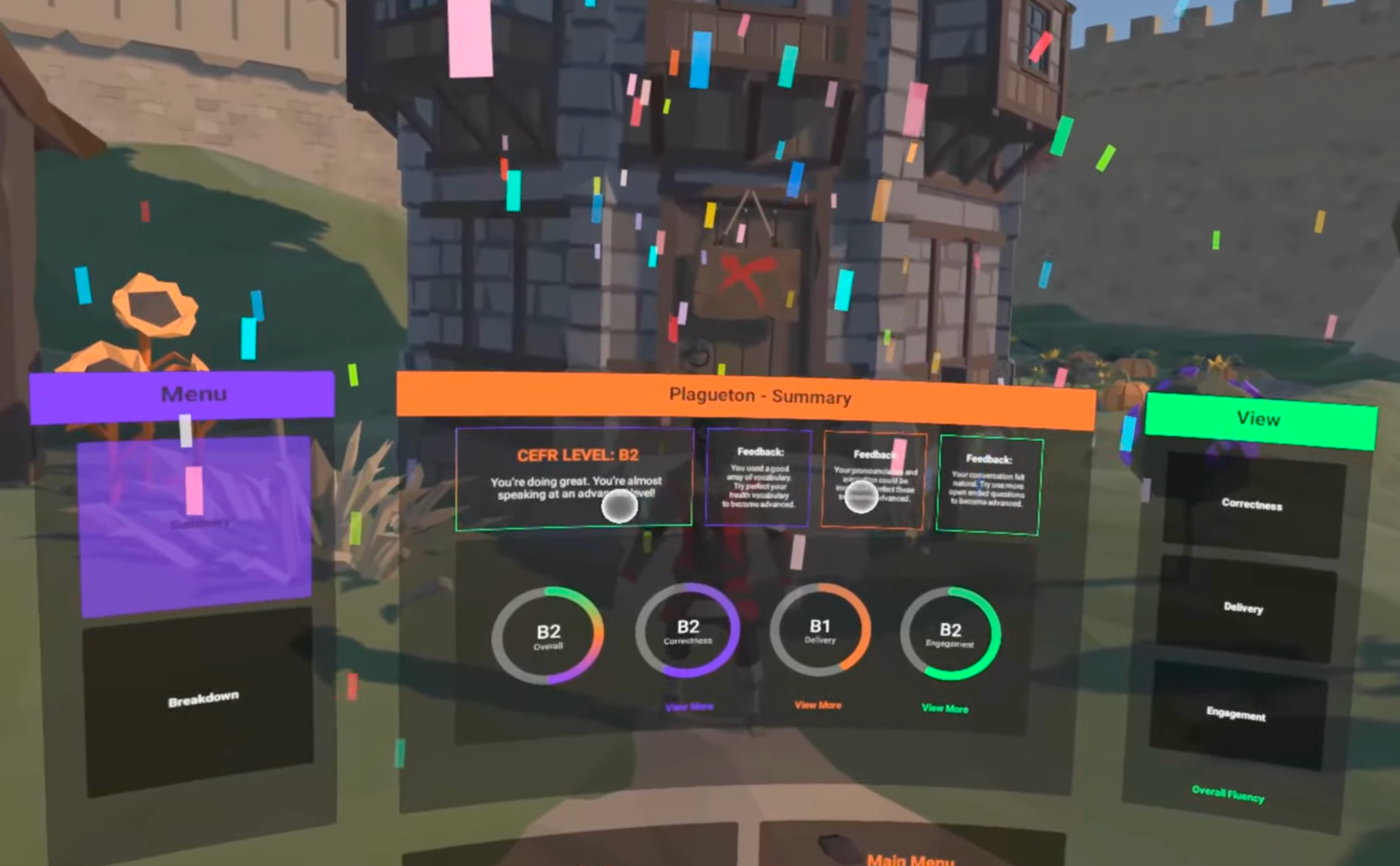
After each interaction, players receive a detailed UI breakdown of their performance based on Correctness, Delivery, and Engagement. This provides actionable, specific feedback, helping users understand exactly how to improve their conversational skills, grammar, and natural intonation.
Na elke interactie ontvangen spelers een gedetailleerde UI-analyse van hun prestaties op basis van Correctheid, Levering en Betrokkenheid. Dit biedt bruikbare, specifieke feedback, waardoor gebruikers precies begrijpen hoe ze hun gespreksvaardigheden, grammatica en natuurlijke intonatie kunnen verbeteren.
03
Replayability for ProficiencyHerspeelbaarheid voor taalbeheersing
To develop real CEFR proficiency, the game uses its branching structure to turn playtime into practice. Reaching an ending encourages players to restart and explore new conversational paths. By replaying the game to master each subject and collect every item, players unlock an advanced final interaction—ensuring that their drive to complete the game directly mirrors their journey to language mastery.
Om een echte ERK-vaardigheid te ontwikkelen, gebruikt de game de vertakkende structuur om speeltijd om te zetten in oefening. Het bereiken van een einde moedigt spelers aan om opnieuw te beginnen en nieuwe gesprekspaden te verkennen. Door de game opnieuw te spelen om elk onderwerp te beheersen en elk item te verzamelen, ontgrendelen spelers een geavanceerde eindinteractie — wat ervoor zorgt dat hun drang om de game uit te spelen direct hun reis naar taalbeheersing weerspiegelt.
05
The ImpactDe Impact
+40%
Potential vocabulary increase through NPC interactions (Rankin study)
Potentiële toename in woordenschat via NPC-interacties (Rankin-studie)
115
Unique ways to play
Unieke manieren om te spelen
94%
Task completion during usability testing
Taakvoltooiing tijdens bruikbaarheidstests
06
Reflection & LearningsReflectie & Geleerde lessen
What I LearnedWat ik heb geleerd
Holding my first solo workshop was instrumental; it proved that gathering diverse perspectives is crucial to stepping outside my own biases. I also learnt how to navigate Unity and the Oculus SDK, translating 2D UI concepts into tangible VR interfaces.
Het organiseren van mijn eerste solo-workshop was essentieel; het bewees dat het verzamelen van diverse perspectieven cruciaal is om buiten mijn eigen vooroordelen te treden. Ik heb ook geleerd om te navigeren in Unity en de Oculus SDK, waarbij ik 2D UI-concepten vertaalde naar tastbare VR-interfaces.
What I'd Do DifferentlyWat ik anders zou doen
I would proactively strive to create a less Eurocentric prototype by arranging focus groups with diverse communities to challenge my biases. Additionally, better time management during the ideation phase would have allowed me more time to refine the game's branding and explore backend machine learning concepts further.
Ik zou er proactief naar streven een minder Eurocentrisch prototype te maken door focusgroepen te organiseren met diverse gemeenschappen om mijn vooroordelen uit te dagen. Bovendien had een beter tijdbeheer tijdens de ideatiefase me meer tijd gegeven om de branding van de game te verfijnen en backend machine learning-concepten verder te verkennen.